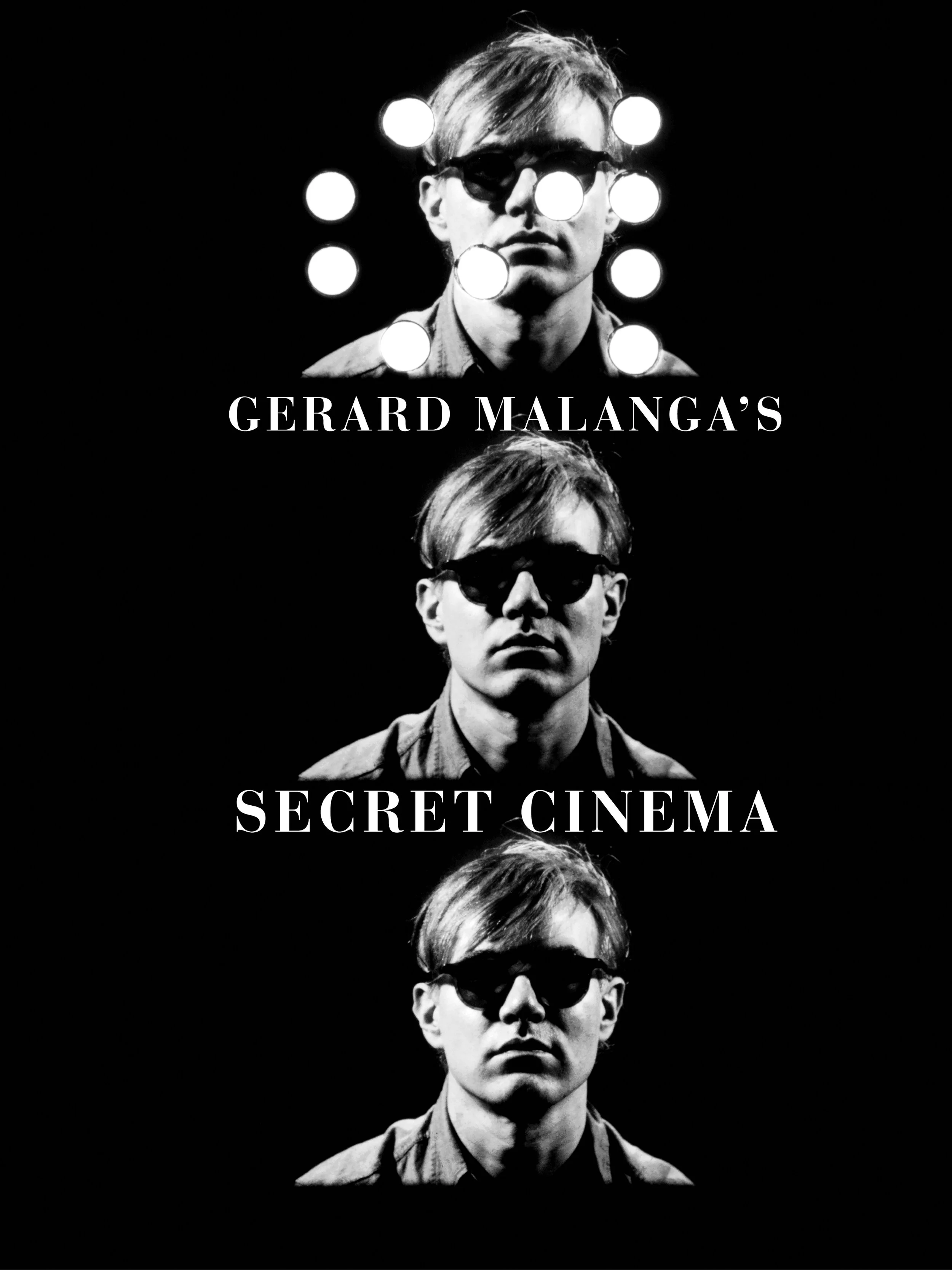
 Image 1 of 1
ABOUT THE PUBLICATION
Edited by Dagon James and Anastasia James
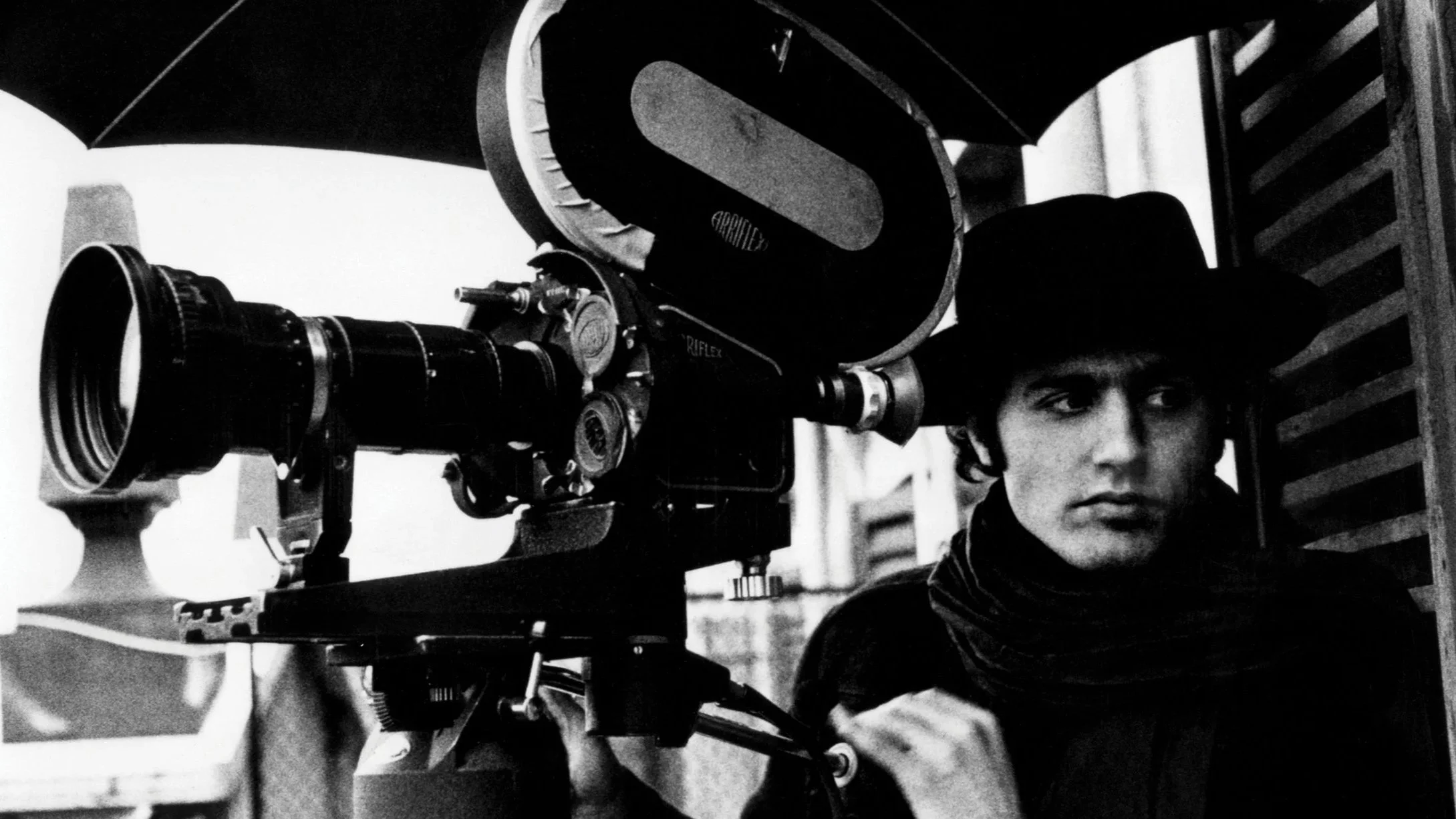
Gerard Malanga is widely recognized as one of the most important poets, photographers, and artists of his generation. Over the past six decades, his work has appeared in hundreds of publications, documenting the people, places, and cultural movements that shaped the artistic landscape of the second half of the twentieth century.
As a young artist in New York during the 1960s, Malanga became Andy Warhol’s principal assistant and collaborator, working alongside Warhol during one of the most influential periods of the artist’s career. Between 1964 and 1971, Malanga contributed to the creation of many of Warhol’s most significant paintings, sculptures, and films while simultaneously developing his own body of experimental cinematic work. Although Malanga’s photography and poetry have received widespread recognition, his films have remained largely unseen. These works provide a rare and intimate record of the artistic community surrounding the Factory and the broader underground culture of New York during a transformative period in American art.
For more than fifteen years, editor and archivist Dagon James researched, documented, and assembled the materials necessary to create Gerard Malanga’s Secret Cinema. Working closely with Malanga, James traced the history of the films, located surviving 16mm films, and helped reconstruct a body of work that had remained largely inaccessible for decades. The result is the most comprehensive publication to date dedicated to this important body of cinematic work, preserving not only the films themselves but also the history, context, and creative environment in which they were created.
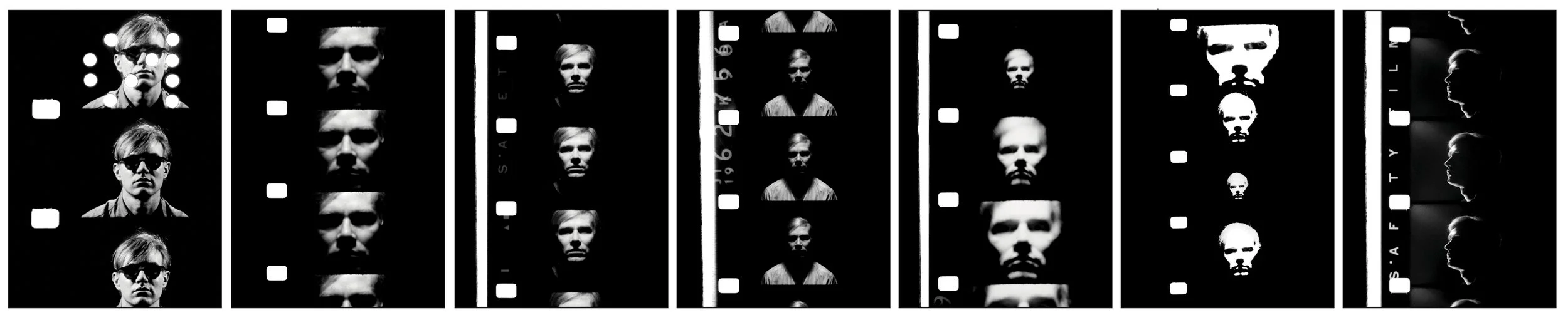
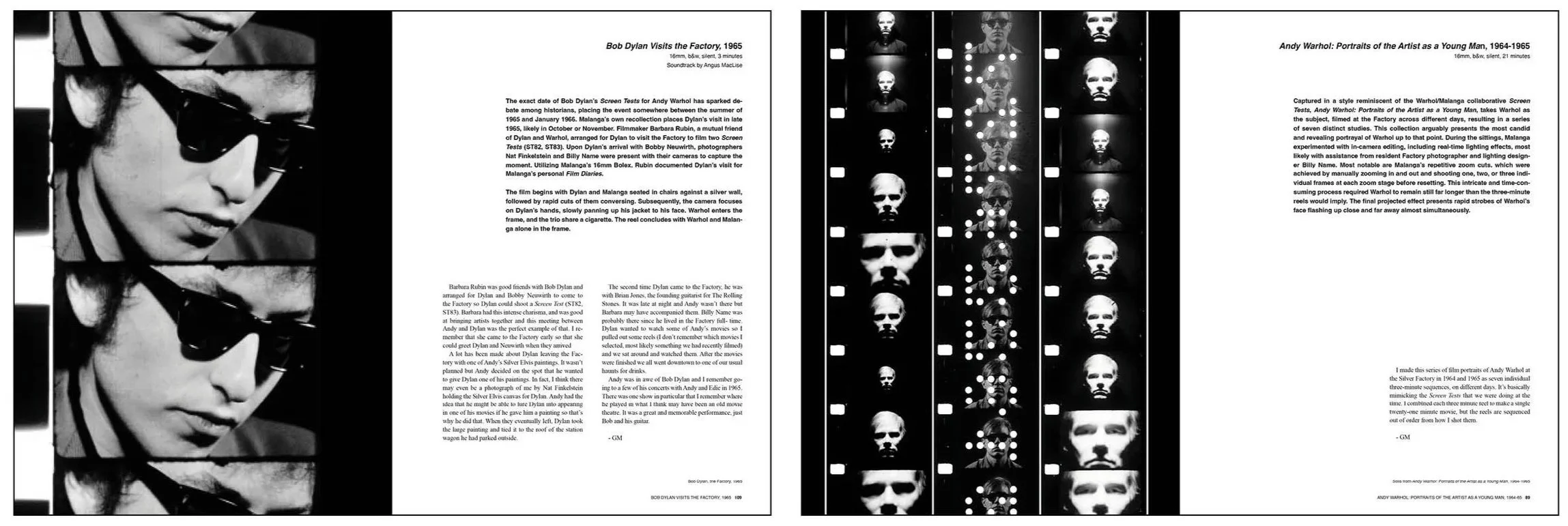
One of the most significant works within Malanga’s cinematic archive is his series of film portraits of Andy Warhol, created between 1964 and 1965. Comprising seven individual three-minute 16mm reels, Andy Warhol: Portraits of the Artist as a Young Man offers an intimate and revealing glimpse of Warhol during a formative period in his artistic development. The films capture Warhol not only as an artist, but also as a central figure within the creative community that surrounded the Factory.
Alongside Malanga’s own output, Secret Cinema highlights the films by Malanga’s friend and collaborator, poet and filmmaker, Piero Heliczer. Malanga writes extensively about his work with Heliczer alongside film stills and archival photographs of this remarkable artist.
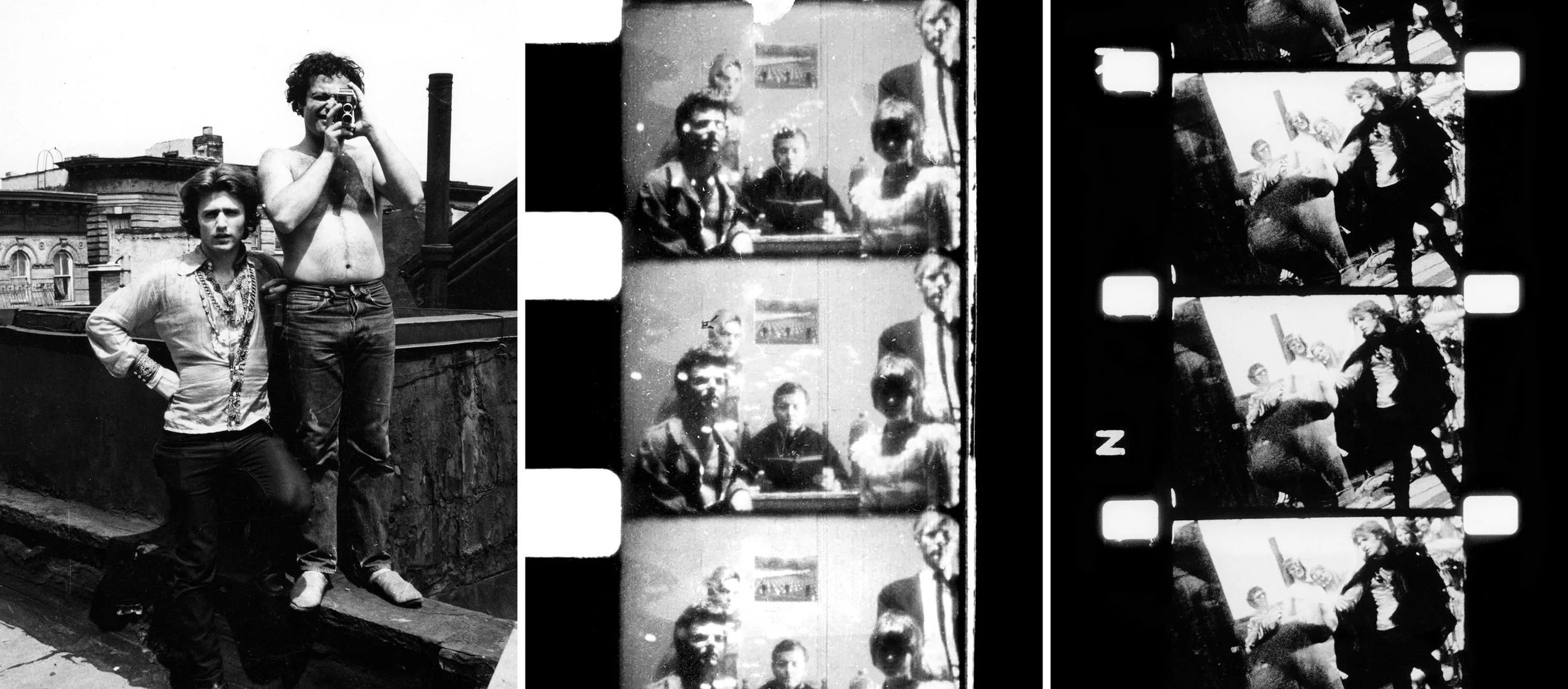
Left: Gerard Malanga and Piero Heliczer, 1968. Center: Edie Sedgwick, Gerard Malanga, Charles Henri Ford, Andy Warhol and Rosebud Feliu Pettet in a sequence from Heliczer’s 1965 movie, Dirt. Right: Malanga playing the Crow in Heliczer’s 1968 movie, Lord Byron.
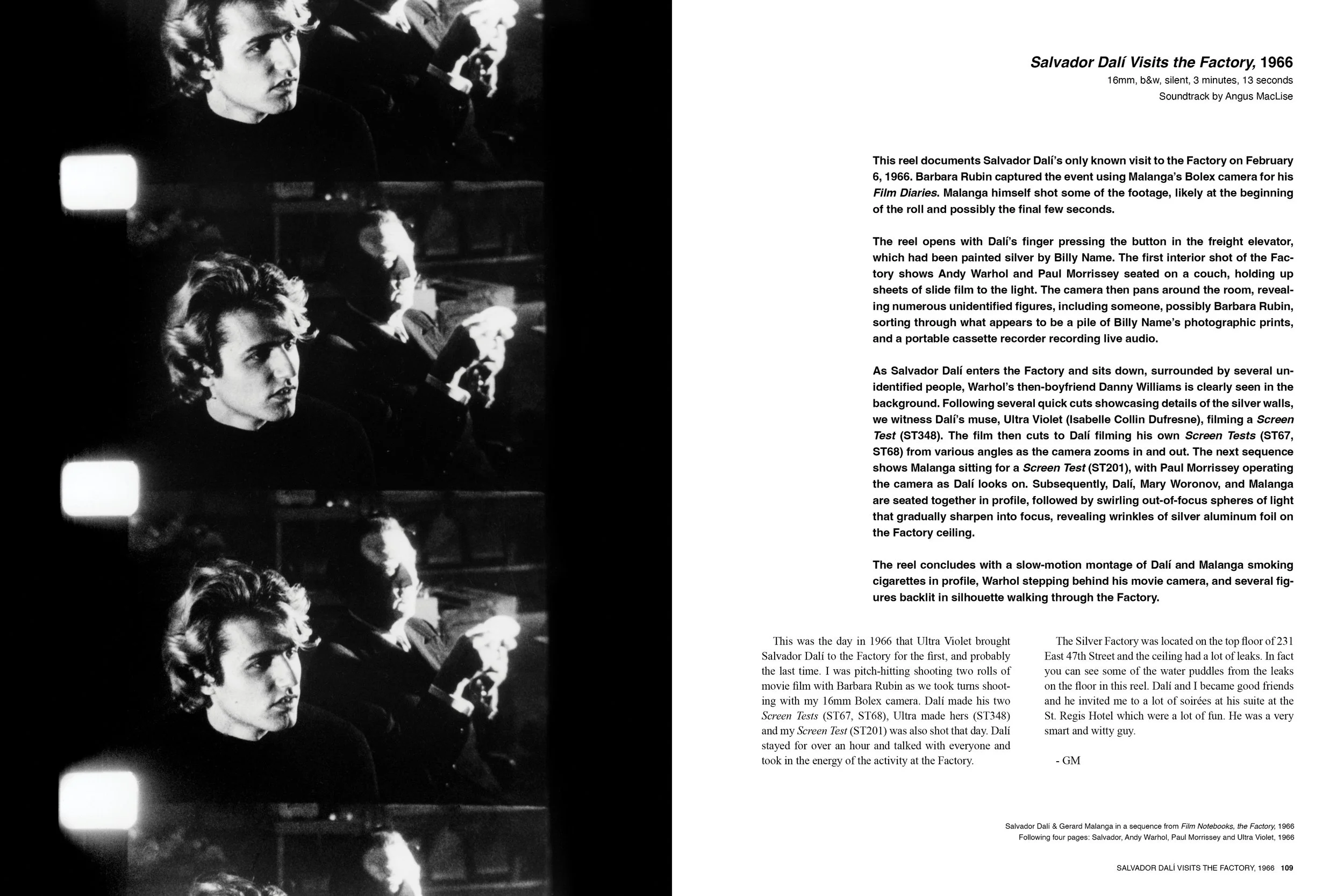
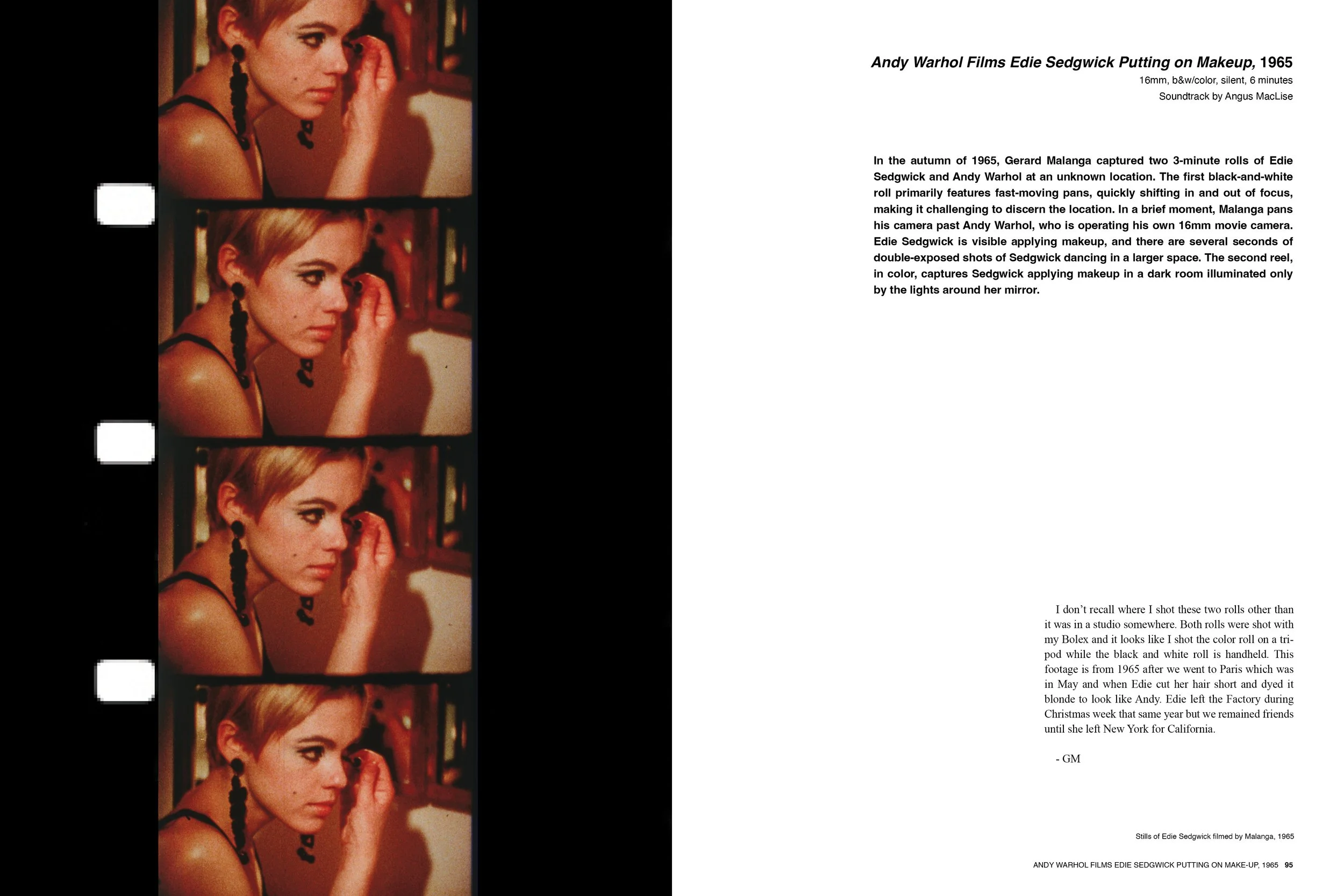
Many of Malanga’s films were created in and around Andy Warhol’s Factory and document rare appearances by artists, musicians, writers, and cultural figures including Salvador Dalí, Jack Smith, Donovan, Bob Dylan, Edie Sedgwick, Mary Woronov, Loulou de la Falaise, Charles Olson, John Wieners, Allen Midgette, Susan Bottomly, David Croland, René Ricard, John Wilcock, Cecil Beaton, Candy Darling, Roger Vadim, Jane Fonda, and members of The Velvet Underground and Nico.
Gerard Malanga’s Secret Cinema documents nearly every film created during this period, accompanied by detailed film notes written by Malanga himself. Over time, many of these films had become scattered among private collections and archives, with some surviving in only a single known print. Locating, documenting, restoring, and presenting these works made the project a uniquely challenging archival undertaking.
More than a collection of film documentation, Gerard Malanga’s Secret Cinema presents an extraordinary visual record of a defining moment in American art history. Through Malanga’s lens, the book preserves a world of artists, performers, writers, and cultural figures at a pivotal moment when new forms of creative expression were emerging in New York.
Edited by Dagon James and Anastasia James, Gerard Malanga’s Secret Cinema is the most comprehensive publication to date documenting Malanga’s cinematic work from 1964–1971, providing renewed access to a remarkable body of films that remained largely unseen for decades.
EDITION DETAILS
HARDCOVER EDITION
• Limited to 125 numbered copies
• 8 × 10.25 inches
• Silver gilt pages
• Signed by Gerard Malanga
• 240 pages
• ISBN: 978-1-62628-040-3
SOFTCOVER EDITION
• Slightly revised second edition
• Limited to 200 copies
• 7.5 × 10 inches
• 246 pages
• Available signed or unsigned